

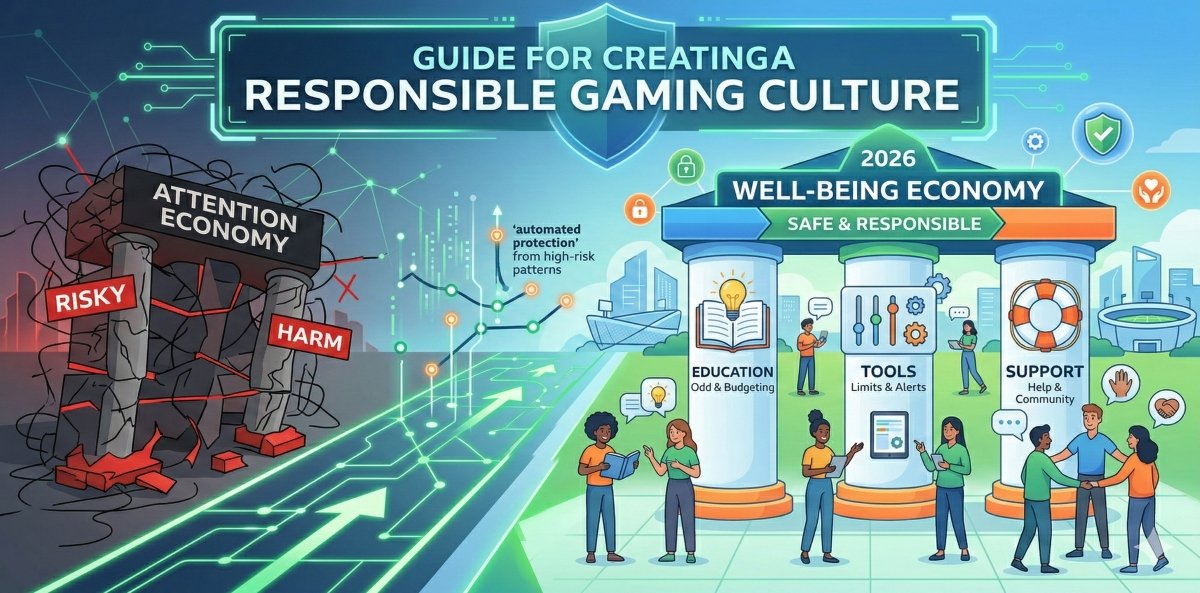
The world of gaming and sports betting is changing fast. In 2026, technology allows us to play games and place bets from almost anywhere. While this is exciting, it also brings a new responsibility. For a gaming community to be healthy and successful in the long term, it must be built on a foundation of safety. This is what we call a “responsible gaming culture.”
Creating this culture is not just about following laws. It is about making sure that every player feels supported and knows how to stay in control. Whether you are running a small “Toto” site or a large international platform, building a culture of responsibility is the best way to protect your users and your business.
What is a Responsible Gaming Culture?
A responsible gaming culture is an environment where players are encouraged to see gaming as a form of entertainment, not a way to make money. In this culture, the platform and the players work together to prevent harm. It is a shift from the old “attention economy,” where companies only cared about time spent on the site, to a “well-being economy,” where the health of the player is the most important metric.
In 2026, this culture is built on three main pillars: Education, Tools, and Support.
Educating the Player from Day One
The first step in creating a safe culture is honesty. From the moment a player signs up, they should receive clear information about how the games work.
The Reality of Odds: Players should understand that the “house” always has an advantage. Use simple language to explain that winning is never guaranteed.
The Role of Luck: Many players believe they have a “system” or can predict the future. A responsible culture teaches that results are based on random numbers or unpredictable sports events.
Budgeting Skills: Encourage players to set a “gaming budget” just like they would for a movie or a dinner out.
By providing this information early, you help players set realistic expectations. This reduces the frustration that often leads to risky behavior.
Providing the Right Tools for Control
In 2026, tech companies are racing to build better safety tools. A responsible gaming culture gives players the power to set their own limits before they even start playing.
Deposit Limits: Allow players to set a maximum amount of money they can add to their account each day, week, or month.
Time Alerts: It is easy to lose track of time when you are in “the zone.” Automated pop-ups that tell a player they have been active for an hour can act as a helpful “reality check.”
Self-Exclusion: Every platform should have a “panic button.” If a player feels they are losing control, they should be able to block themselves from the site instantly for a week, a month, or even a year.
These tools should be easy to find and simple to use. When safety features are hidden in a complicated menu, they are less effective. A responsible culture makes these tools a visible part of the user experience.
Using Data for Automated Protection
As we have seen in 2026, analytics can do more than just track profits. They can be used to save players from harm. A responsible platform uses machine learning to look for signs of “chasing losses” in player behavioral analytics.
If the system detects that a player is suddenly betting more money than usual or staying online for 10 hours straight, it should trigger an “automated intervention.” This might be a simple message asking if the player is okay, or it might be a temporary “cool-down” period where the player is blocked from placing new bets for a few hours.
Dr. Sarah Mills, a leading expert in digital safety, says that “the best systems don’t wait for a crisis; they use data to offer help before the player even realizes there is a problem.”
Building a Supportive Community
A culture is not just made of code; it is made of people. The way a platform talks to its users matters.
Language Matters: Avoid using high-pressure language that makes players feel like they are “missing out” if they don’t bet right now.
Training Staff: Every customer support agent should be trained to recognize the signs of problem gaming. If a user calls and sounds distressed or angry about a loss, the agent should know how to guide them toward help instead of just trying to keep them on the phone.
Positive Reinforcement: Instead of only celebrating the “big winners,” a responsible culture also celebrates “smart players”—those who stick to their budgets and use safety tools.
The Long-Term Benefits of Responsibility
Some companies worry that a responsible gaming culture will lead to lower profits. However, the opposite is often true. Players who feel safe and respected are more likely to remain loyal customers for many years. On the other hand, if a platform allows players to go into debt or lose control, they will eventually stop playing entirely, often leaving behind a trail of legal and social problems.
In 2026, the most successful sports sites are the ones that have built deep trust with their users. By prioritizing well-being over short-term gain, these companies are ensuring their own survival in a world that is increasingly focused on ethics and safety.
A Final Thought on Culture
Creating a responsible gaming culture is an ongoing process. It requires constant updates as technology evolves and as we learn more about how the human brain reacts to digital entertainment. By making safety a core part of your mission, you are not just following the rules—you are helping to build a better, more sustainable future for the entire gaming world.