
Early Fan Experience – The Radio Era
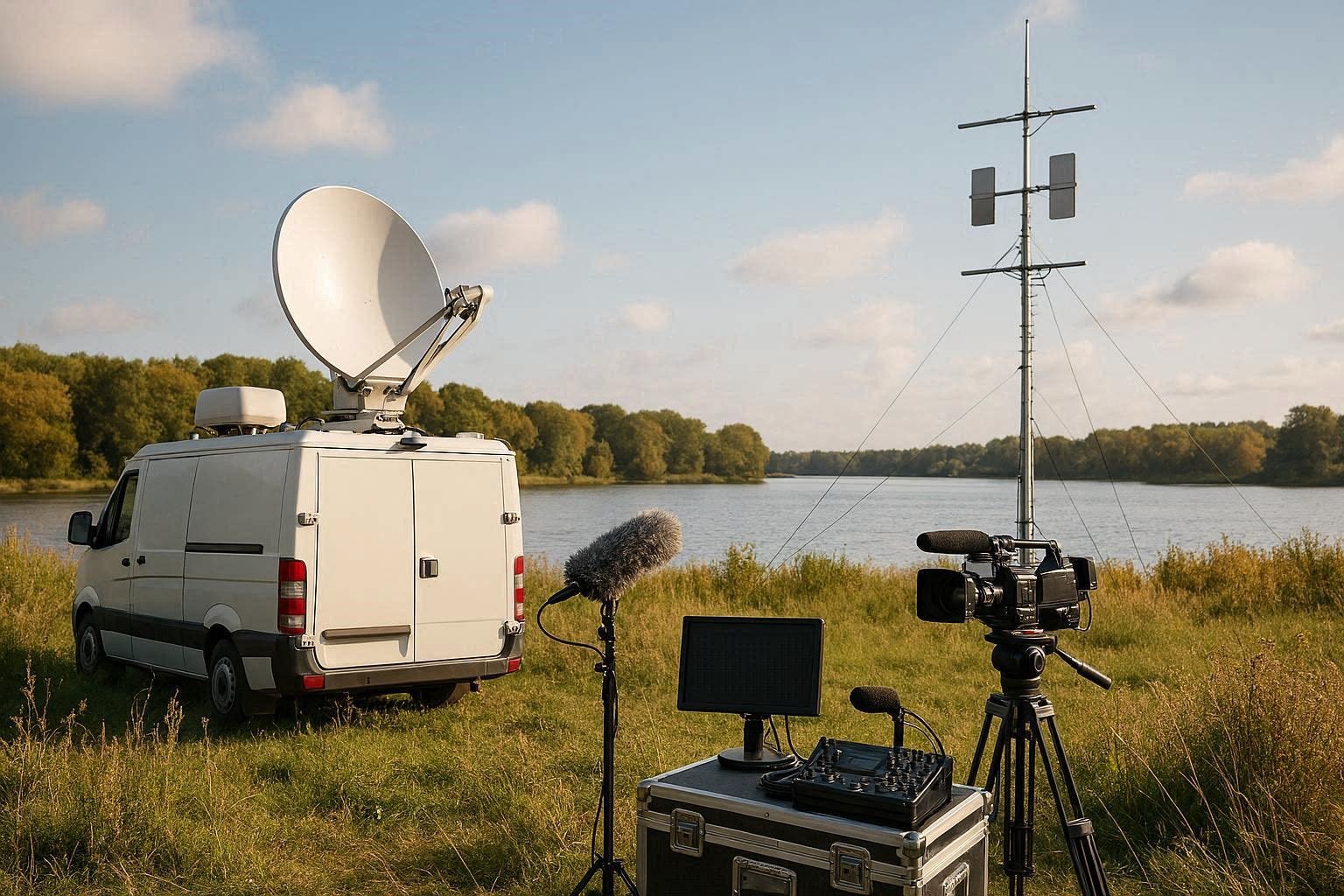
- Radio broadcasts allowed fans to imagine the stadium atmosphere.
- Families and neighbors gathered, creating a communal listening tradition.
The Television Era – Visual Immersion
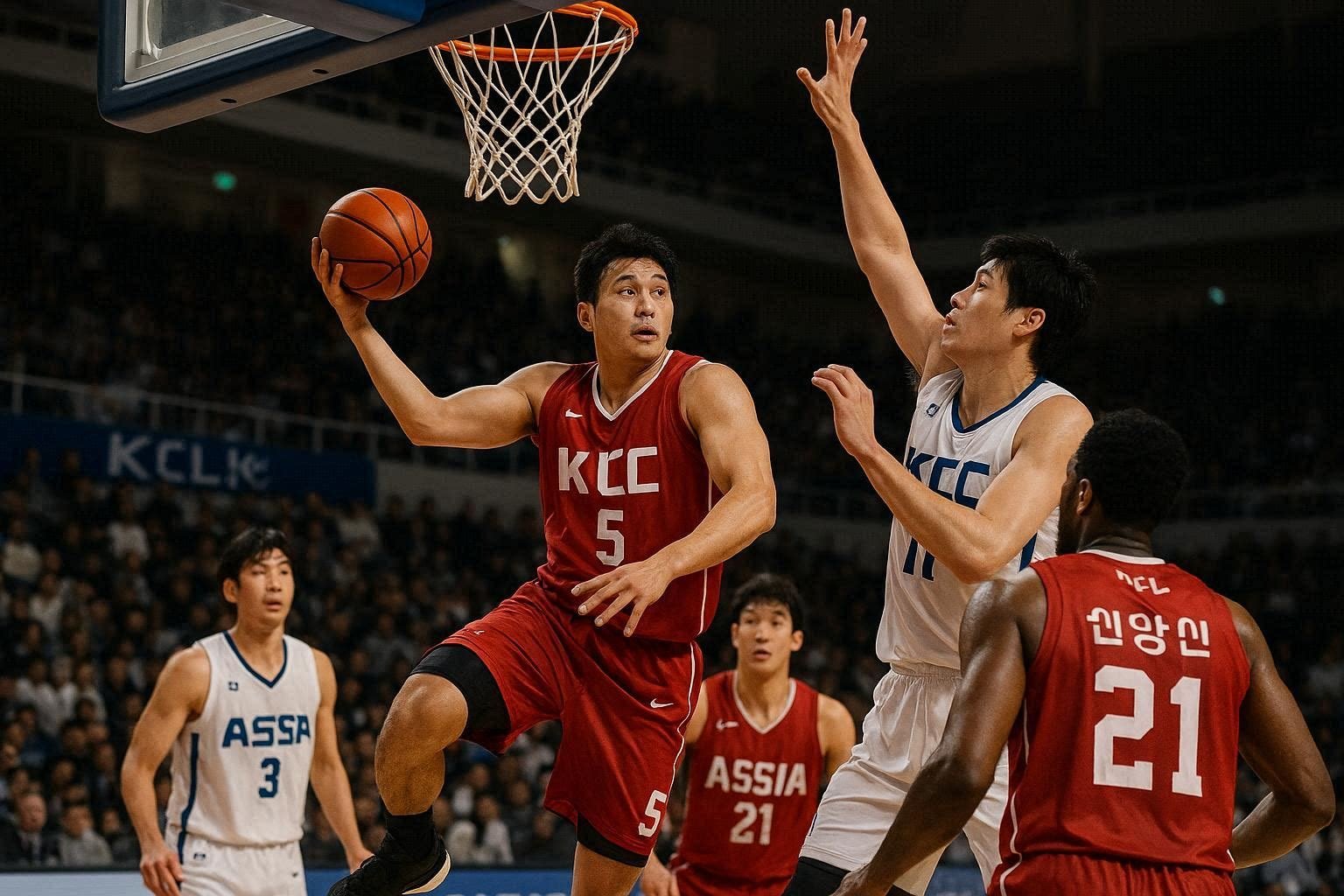
- Television brought stadiums into living rooms.
- Replays and slow motion deepened understanding of the game.
- Sports became cultural events beyond competition.
Cable & Satellite – The Birth of Global Fandom
- International competitions expanded fan communities worldwide.
- Stronger loyalty to teams and athletes fostered global fan bases.
The Digital Era – Expanding Fan Participation
- Social media enabled real‑time sharing of opinions, memes, and highlights.
- Fans became content creators, not just viewers.
- Fantasy sports and live chats personalized the experience.
Interactive Streaming – Fans Take the Lead
- Fans choose camera angles or influence coverage via live polls.
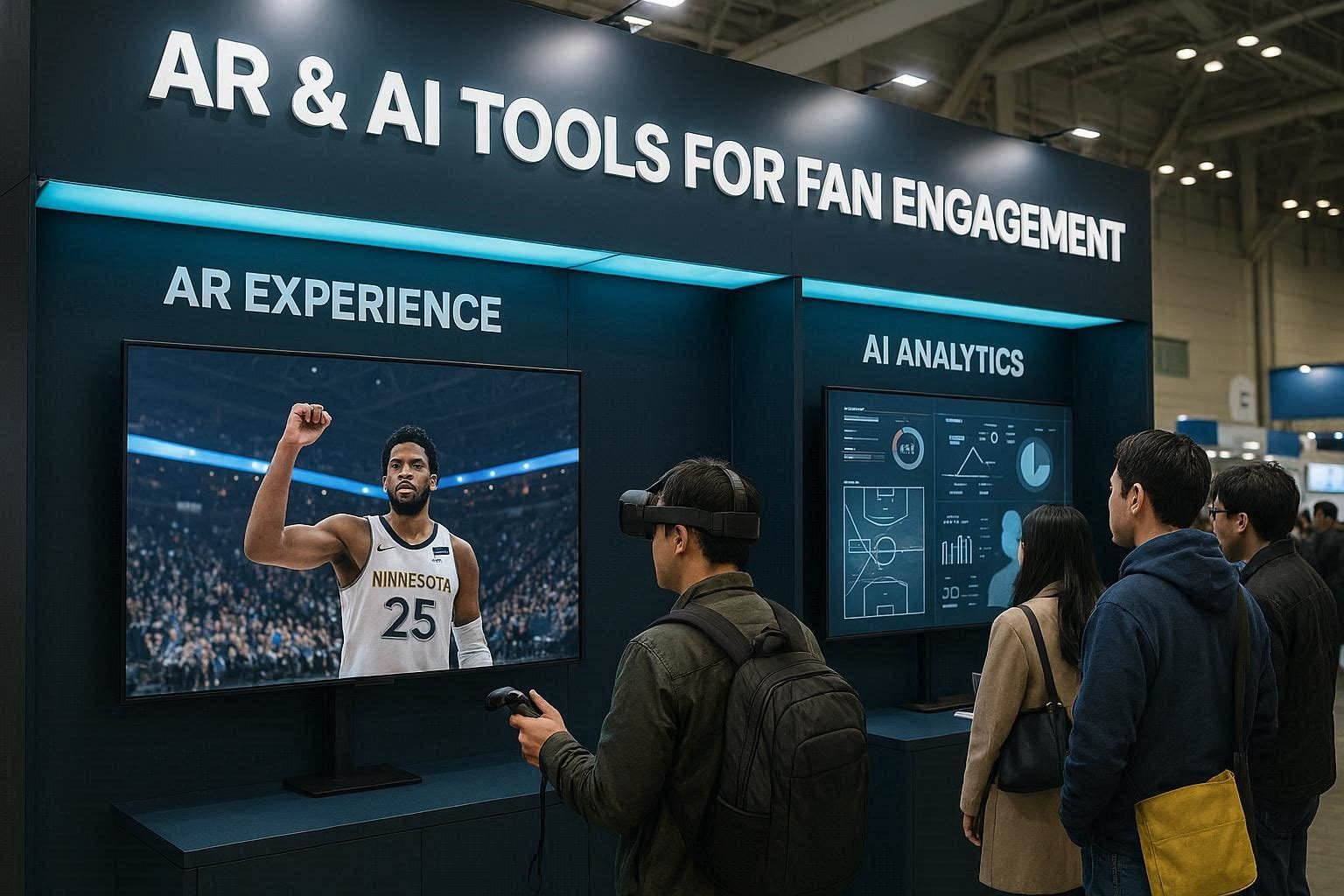
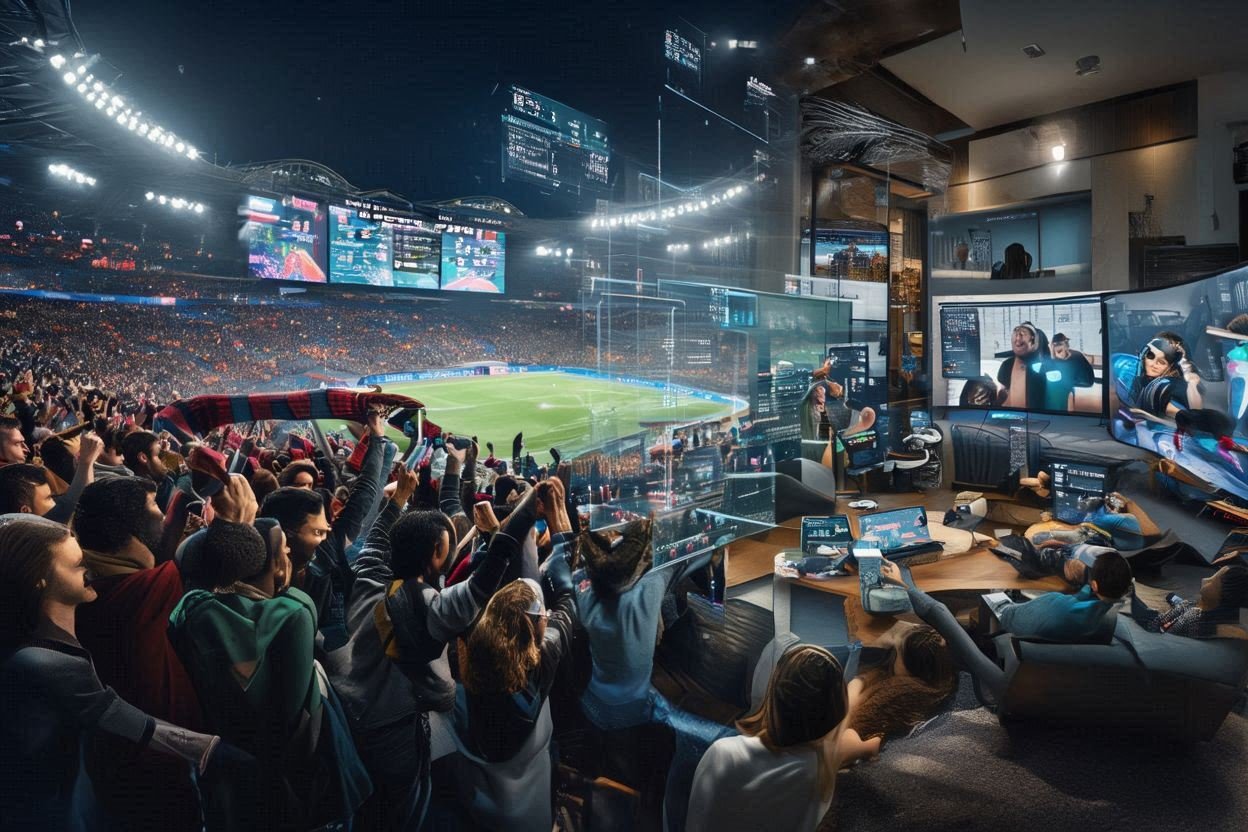
- AI analytics and VR stadium experiences create immersive engagement.
- Participation shifted from passive cheering to active involvement.
Summary of Fan Experience Evolution
| Era | Fan Experience | Participation Style |
|---|---|---|
| Radio (1920–30s) | Communal imagination | Listening with family/neighbors |
| Television (1950–70s) | Visual immersion | Collective viewing |
| Cable/Satellite (1980–90s) | Global fandom | Watching international competitions |
| Digital (2000–10s) | Personalized participation | Social media, fantasy sports |
| Interactive (2020–Present) | Immersive & participatory | AI, VR, live polls |
Conclusion
The evolution of live sports broadcasting is not just about technology—it’s about transforming fan experience. Fans are now active participants shaping the way sports are consumed. Looking ahead, broadcasting will continue to blur the line between the game and the audience, creating deeper connections and more interactive experiences.