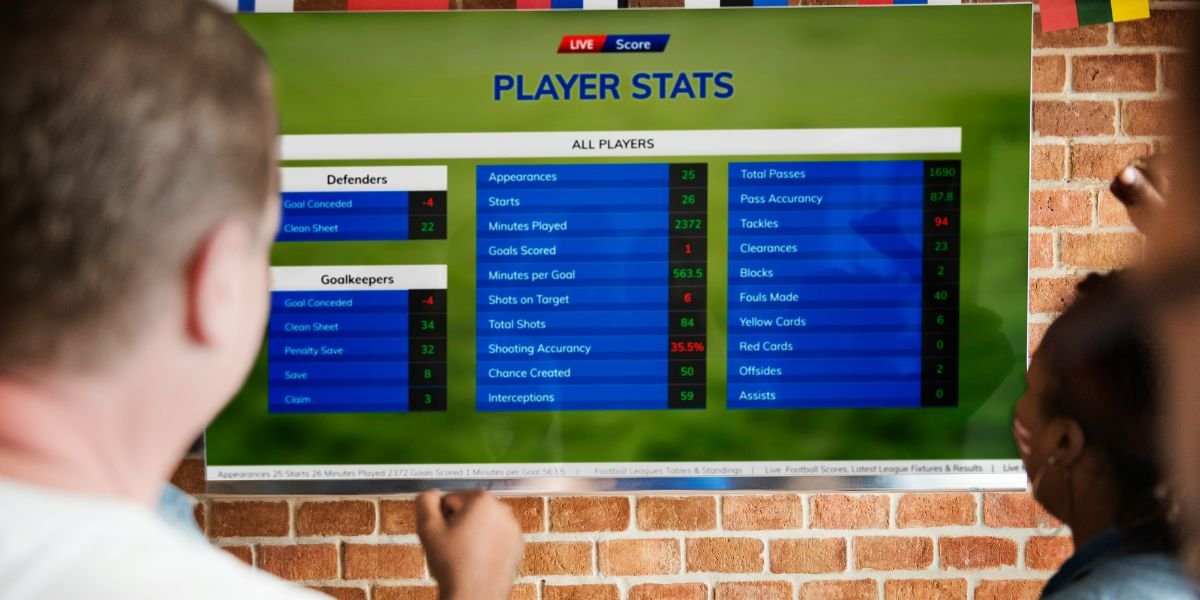

Structural Revolution of Real-Time Betting Systems: Redesigning Interaction and Decision-Making

The integration of real-time events and betting is not a simple addition of features, but a structural fusion between the physical world and digital systems. Participation no longer occurs solely before an event begins; it happens at the exact moment an action unfolds. Odds update continuously, information shifts by the second, and decision-making synchronizes with live conditions.

This shift represents a fundamental transition in timing and system design. For Additional information on how this fusion reconfigures the mechanics of engagement, one must look at how the gap between physical action and digital response has been nearly eliminated.

The Essence of Real-Time Integration

Real-time integration links the timeline of an event directly to a digital system. As an event progresses, system inputs update instantly, causing prices and probabilities to react in a fluid, continuous manner.

Key characteristics include:

  • Live Decision-Making: Choices made during the progression of an event rather than beforehand.

  • Dynamic Odds: Continuous price adjustments based on newly revealed information.

  • Multiple Decision Points: Numerous interaction opportunities within a single event.

  • Instant Feedback: Immediate system responses rather than delayed outcomes.

Through this integration, the event itself becomes the interface for interaction.

Transition: From Pre-Match Betting to Live Engagement

Traditional betting systems were episodic. A decision was placed before the event, followed by a long waiting period until settlement. Live integration replaces this with continuous interaction. Decisions are embedded within the event timeline, allowing participation to adapt in real time as conditions change. The gap between observation and decision is compressed, fundamentally altering engagement dynamics.

Infrastructure: The Vital Role of Real-Time Data

Live systems depend entirely on high-speed data feeds. These feeds translate physical events into instant system inputs, enabling rapid recalculation of probabilities and prices. The system’s role shifts from predicting outcomes to interpreting unfolding reality.

This dependency on speed-driven inputs reflects the broader structural transformation described in Related article, where increased data velocity fundamentally restructured market logic rather than simplifying it.

Surging Decision Density

One of the most significant structural effects of real-time integration is the dramatic increase in decision density. Where pre-match systems supported a single decision per event, live systems enable dozens of interactions within the same timeframe. Engagement scales by time rather than by event count, increasing immersion without extending duration.

Cognitive Load and Compressed Timing

Real-time participation operates under compressed decision windows. Information arrives continuously, deliberation time shrinks, and responsiveness increases. These conditions heighten reliance on short-term signals and immediate feedback. Importantly, these outcomes are structurally induced by timing and feedback design rather than by individual user tendencies.

Convergence with Intuitive Media

Live integration aligns seamlessly with how audiences already experience events. Viewers naturally react to momentum shifts, turning points, and critical moments. Real-time systems formalize these instinctive reactions into structured decision points. Advances in streaming, live statistics, and data overlays reduce perceptual lag and reinforce the sense that the system mirrors reality.

Behavioral Patterns Driven by Integration

Real-time structures tend to induce consistent behavioral patterns:

  • Heightened focus on immediate signals.

  • Increased sensitivity to visible momentum changes.

  • Greater emphasis on short-term outcomes.

These patterns arise from system timing and feedback loops, shaping behavior before conscious intent plays a role.

Structural Efficiency Driving Market Growth

From a system perspective, live integration increases interaction density without requiring longer events or larger audiences. Growth is achieved through temporal efficiency—extracting more engagement from the same event duration. This efficiency is a structural outcome of real-time design.

Structural Trends Built on Technical Foundations

The expansion of real-time systems was enabled by advances in data transmission speed, reduced latency, mobile accessibility, and continuous computation. Human behavior did not fundamentally change; the technical environment did. Systems evolved to synchronize more closely with reality, creating new interaction conditions.

Recent 2024 research on real-time digital infrastructures emphasizes that reduced latency and continuous feedback loops significantly reshape decision environments and user behavior, a principle highlighted in the OECD’s latest work on digital system governance and resilience (OECD – Digital Governance, 2024).

Why This Understanding Matters

Viewing live betting through a structural lens explains why decision frequency increases, why engagement intensifies without longer sessions, and why short-term outcomes gain prominence. Analysis shifts away from individual choices toward system timing, feedback design, and data flow.

The integration of real-time events and betting transformed betting from a preliminary action into a continuous interactive system. Time became the organizing principle, the event the interface, and participation an ongoing process. This evolution did not merely enhance engagement—it restructured the experience itself.

Mobile-Centric Era: How Digital Experience Reconstructs Daily Engagement

The rise of mobile-centric design and digital experiences has fundamentally altered how people interact with games, betting systems, and probability-based platforms. Activities once tied to specific locations, time windows, or desktop environments are now woven directly into daily digital life. This shift goes beyond convenience; it represents a structural transformation in accessibility, behavioral rhythms, and system design.

The dominance of mobile-centricity explains the increase in engagement frequency and changes in immersion patterns. This trend is further analyzed in More details regarding how digital systems have transitioned from supporting channels to the primary experience for most users.

The Practical Meaning of Mobile-Centric Design

Mobile-centricity does not simply mean availability on a smartphone. It means the system is designed first for mobile behavior, with other formats treated as secondary.

Core characteristics include:

  • Interfaces optimized for touch and small screens

  • Short, repeatable interaction cycles rather than long sessions

  • Continuous availability instead of scheduled access

  • Seamless integration with everyday digital habits

In this structure, engagement is no longer a discrete activity. It becomes a background condition—always present and immediately accessible.

From Planned Access to Instantaneous Engagement

Before mobile-centric systems, engagement required deliberate planning: being in the right place, allocating time, or sitting at a fixed device. Mobile access eliminated these requirements. Engagement now occurs:

  • During brief idle moments

  • Alongside other activities

  • In response to immediate stimuli

  • Without conscious preparation

Rather than increasing the intensity of individual sessions, mobile-centricity multiplies engagement frequency, expanding total participation over time.

Why Digital Experience Transcends Physical Limits

Physical environments are constrained by space, staffing, operating hours, and geography. Digital systems are not. Mobile platforms scale through software, operate continuously, and accommodate additional users at negligible marginal cost. Once infrastructure exists, growth accelerates naturally.

This shift mirrors the broader transformation of system design driven by access and participation scale, explored further in Related article.

UX Design and the Removal of Friction

Mobile-centric systems prioritize friction reduction. Interactions are engineered to require minimal effort—fewer steps, persistent sessions, and immediate responses. This design does not create new desires; it removes resistance. When friction disappears, repetition increases. Ease of access becomes a structural driver of engagement frequency.

Real-Time Feedback and the Reinforced Engagement Loop

Mobile platforms deliver instant feedback. Updates, confirmations, and results appear immediately, reinforcing a sense of continuity. Even when long-term outcomes remain unchanged, rapid feedback intensifies short-term perception. Engagement feels more dynamic because the system responds without delay.

Fusion with Daily Digital Life

Smartphones serve as hubs for communication, work, navigation, and entertainment. When engagement systems operate within this same environment, they no longer require a context shift. Participation blends seamlessly into daily routines, reducing psychological separation and increasing habitual interaction. Engagement becomes ambient rather than intentional.

Behavioral Changes Driven by Structural Convenience

Mobile-centricity does not fundamentally alter preferences; it changes how and when they are expressed. Observable shifts include shorter but more frequent interactions, heightened responsiveness to live moments, and greater emphasis on immediate opportunities. These changes stem from structural availability, not altered motivation.

The Self-Reinforcing Nature of Mobile Dominance

Once mobile becomes the primary channel, optimization follows usage. Systems evolve based on mobile data, features are designed mobile-first, and expectations reset around immediacy. Recent 2024 research on global mobile usage patterns confirms this structural trend, noting that mobile-first platforms now account for the majority of daily digital interactions worldwide, as outlined in the GSMA Mobile Economy Report 2024.

Summary

Mobile-centric design reshaped engagement by aligning systems with modern digital lifestyles. Continuous access, reduced friction, real-time feedback, and seamless integration into daily routines structurally increased participation frequency. This dominance is not driven by novelty or preference shifts, but by efficiency. As long as digital systems remain scalable, immediate, and ever-present, mobile-centric experience will continue to define how engagement operates in digital platforms.