
Spotting a “Too Good To Be True” Offer: How to use logic when you see an advertisement that promises impossible wins

Walking through the digital world can feel like walking through a brightly lit city full of neon signs. Everywhere you look, there are advertisements designed to grab your attention. This is especially true in the world of online casinos. You might see an ad that promises a “100% win rate,” “secret hacks to beat the system,” or “guaranteed wealth in five minutes.”

While these offers look exciting, they are almost always designed to exploit your hope. To protect your money, you need to use logic. Think of it like a shield that protects you from making expensive mistakes.

Understanding the Business Side

To spot a fake offer, you first need to understand how a casino works. An online casino is a business, just like a grocery store or a restaurant. A business exists to make a profit. If a restaurant gave away free steaks to every single person who walked in, it would close its doors in a week.

Online casinos operate on a mathematical edge. This means that, over a long period, the house always keeps a small percentage of the money played. If an advertisement promises that you will “win every time,” logic tells you this cannot be true. If everyone won every time, the casino would have no money to pay for its website, its staff, or the prizes themselves. When an ad ignores the basic rules of business, it is a major red flag.

The “Guaranteed Win” Myth

The word “guaranteed” is a favorite tool for dishonest advertisers. In a real casino, whether online or in person, every game is based on chance. Systems called Random Number Generators ensure that every spin of a wheel or deal of a card is completely unpredictable.

Anyone claiming to have a “system” or a “cheat code” that guarantees a win is not telling the truth. If such a system actually existed, the person who found it would keep it secret and use it to become a billionaire. They would not sell it to strangers on the internet for $20. When you see someone promising a sure thing in a game of luck, your logic should tell you that they are trying to sell you a fantasy.

The Hidden Trap of Huge Bonuses

Almost every online casino offers a welcome bonus. This is a normal part of the industry. However, there is a big difference between a fair bonus and one that is too good to be true.

Imagine you see an ad that says, “Deposit $10, Get $1,000 Free!” This looks like a gift, but it usually comes with a catch called wagering requirements. This means you might have to spend $50,000 of your own money before you are allowed to withdraw a single cent of that “free” $1,000.

Always look for the fine print. A logical person asks, “What is the catch?” If a site makes it nearly impossible to actually get your money back out, the bonus is not a gift, it is a trap to keep you spending.

Fake Social Proof

Scammers know that we trust other people more than we trust companies. To trick you, they often use fake success stories. You might see a video of someone sitting in an expensive car, claiming they bought it after playing on a specific site for two days. Or, you might see a comments section full of people saying, “I just won $5,000! This is so easy!”

Logic helps you see through this. These videos are often filmed with rented cars and paid actors. The comments are usually written by “bots,” which are computer programs designed to act like real people. Real winners do not usually spend their time posting on every advertisement they see. They take their winnings and enjoy their lives. If the excitement in an ad feels forced or artificial, it probably is.

Checking for a Real Foundation

Before you spend a single dollar on a platform, use logic to check its history. A legitimate online casino will have a license from a recognized authority. It will also have a history of real reviews on independent websites.

If you find a site that was created yesterday, has no licensing information, and promises impossible prizes, it is likely a scam. Scammers often build “ghost sites” that look professional but disappear after a few weeks once they have collected enough money from beginners. A quick search for the site’s name plus the word “scam” or “review” can save you a lot of trouble.

The Power of a Cool Head

The goal of a “too good to be true” ad is to make you feel emotional. They want you to feel a “fear of missing out,” or FOMO. They might use countdown timers that say, “Offer expires in 10 minutes!” to make you hurry.

When you feel rushed, you stop using logic. This is exactly what the advertiser wants. If you feel your heart racing because of an ad, take a deep breath and walk away from the computer for a few minutes. Ask yourself, “If I saw this offer in a physical store on my street, would I believe it?” If the answer is no, do not believe it online either.

The PromiseThe Logical Reality
Guaranteed wins every timeCasinos are businesses; they cannot pay everyone.
Deposit $10, get $1,000 freeThere is likely a massive “wagering requirement.”
Secret hacks to winLuck-based games cannot be hacked.
Limited time offer (Act now!)This is a pressure tactic to stop you from thinking.
People winning millions dailyIf it were that easy, the money would have no value.

By keeping these simple rules in mind, you can enjoy your hobby without falling for the traps that catch so many others. Staying safe is all about asking the right questions and trusting your common sense over a flashy advertisement.

Why Winning Makes Us Stubborn

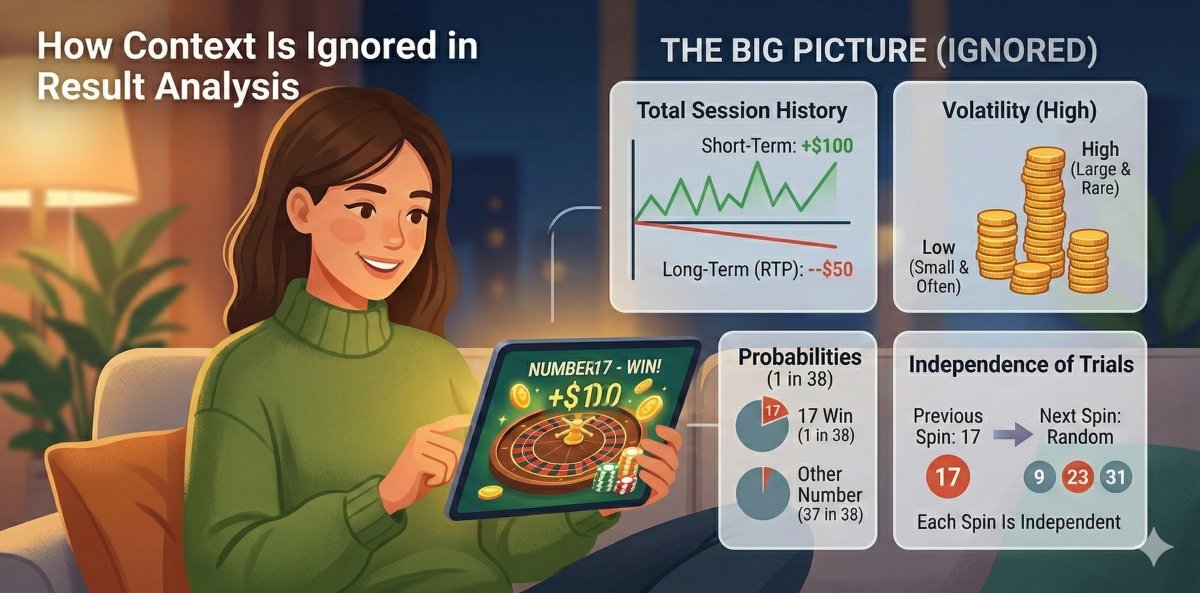
The human brain loves to feel correct. When a person makes a choice, and that choice leads to a good result, something strange happens inside their mind. Instead of thinking they were lucky, they often start to believe they are experts. This is a common psychological trap. In the world of business, sports, or even daily life, winning often makes people more stubborn than they were before.

A smart friend would explain that success can actually be a dangerous teacher. It makes the past look like a simple, clear story, even when it was actually messy and uncertain. To stay smart and keep growing in 2026, it helps to understand why a good outcome often leads to a closed mind.

The “I Knew It All Along” Trick

When a person is in the middle of making a big decision, they usually feel at least a little bit of doubt. They wonder if they are making a mistake, they worry about the risks, and they consider different options. This doubt is healthy because it keeps the brain open to new information.

However, once a good outcome happens, the brain performs a “rewriting” trick. It goes back into the memory and deletes the feelings of doubt. The person forgets they were ever worried. They tell themselves that the win was inevitable. They start to say, “I knew it all along.”

This is known as hindsight bias. It creates a false sense of confidence. Because the person “knew” they would win this time, they believed they would definitely win next time too. This makes them less likely to listen to warnings or look at new data. Their belief in their own judgment becomes hard like a stone.

The Trap of Outcome Bias

People often judge the quality of a decision based on the final result. If a person buys a house that doubles in price, everyone says it was a “great decision.” If the house loses value, people say it was a “bad decision.”

This is actually a mistake in logic. A decision should be judged by the information the person had at the time, not by what happened later. Sometimes, people make terrible, risky decisions but get lucky and win anyway.

For example, think about a driver who speeds through a red light but doesn’t get into an accident. In their mind, they might think, “I am such a good driver that I can handle red lights.” Because the outcome was fine, they stopped questioning the danger of their choice. They become stubborn about their bad habit because they haven’t faced a consequence yet. In 2026, as technology and markets move faster, this habit of “resulting” can lead to very expensive mistakes.

Why Success Becomes a Wall

When someone is successful for a long time, they build a “system” in their head. They believe they have found the secret code for how the world works. This system becomes a part of their identity.

If a new person comes along and says, “The world has changed, and your system is broken,” the successful person often feels attacked. They don’t just see it as a different opinion; they see it as a threat to their status. They point to their past wins as proof that they are right.

This is why many big companies fail when new technology appears. The leaders are so stubborn about the methods that made them rich in the past that they cannot see the future clearly. They are trapped by their own winning history. They stop being students and start being “preachers” of their own old ideas.

The Problem of “Pure Luck”

The hardest thing for a winner to admit is that luck played a part in their success. It is much more comfortable to believe that a win happened because of hard work and high intelligence. While skill is important, the world is full of random events that no one can control.

When a person wins because of a lucky accident but believes it was all skill, they stop learning. They don’t look for ways to improve because they think they are already at the top. This makes them very fragile. The moment their luck runs out, they don’t know how to fix their mistakes because they never admitted they could make any.

How to Stay Flexible

A smart friend would suggest a few ways to keep winning without becoming stubborn. It requires a lot of honesty and a little bit of work.

  • Keep a Decision Journal: When making a big choice, a person should write down exactly what they are thinking, what they are afraid of, and why they are choosing this path. After the result happens, they can read the journal. It will remind them that they were actually quite unsure, which keeps them humble.

  • Focus on the Process: Instead of asking, “Did I win?”, a person should ask, “Did I make a good choice with the information I had?” If the process was good, the win is a bonus. If the process was bad but they won anyway, they should recognize it as a “lucky escape” rather than a sign of genius.

  • Invite a “Challenger”: Smart leaders often hire people specifically to tell them why they might be wrong. By listening to different views, they break down the wall of stubbornness before it gets too high.

Winning feels great, but it can make the mind heavy and slow. By remembering that every win has a bit of luck and that every past decision was once a guess, a person can stay fast, flexible, and ready for whatever comes next.

Why People Overestimate Foresight After Outcomes

After events conclude, people often believe they saw the outcome coming. What once felt uncertain now appears predictable, and confidence in past judgment increases. This sense of foresight feels sincere, yet it rarely reflects what was actually known before the result occurred. Instead, it emerges from a common pattern in how human perception and memory adjust after outcomes are revealed.

This article explains why people overestimate foresight after outcomes and how this tendency shapes understanding. A more technical breakdown of this mental trap is provided in Related article, which explores how memories are retroactively adjusted to fit a known reality.

Perceived Foresight Versus Actual Uncertainty

Before an outcome exists, information is incomplete and ambiguous. Multiple interpretations compete, and no single conclusion dominates with certainty. During this phase, foresight is limited by missing data and genuine unpredictability.

After the outcome, that uncertainty collapses. The mind substitutes what is now known for what was previously guessed. This substitution creates the impression that foresight was stronger than it truly was. This effect is closely related to how final results simplify complex processes, where knowing the ending reorganizes perception of prior uncertainty.

How Memory Rewrites Prior Beliefs

Human memory does not store expectations as fixed records. Instead, it reconstructs them during recall. Once an outcome is known, memory adjusts past beliefs to better align with the result.

People tend to remember:

  • Having stronger confidence than they actually did

  • Favoring the correct outcome more clearly

  • Doubting alternatives less than they truly did

These reconstructed memories feel authentic, even though they differ from original uncertainty.

The Role of Narrative Coherence

Outcomes invite explanations. Once the result is known, the mind builds a coherent story that connects earlier signals to the final outcome. This narrative makes the sequence feel intentional and logical.

As the story becomes more coherent, foresight appears more credible. The explanation feels so clear that it becomes difficult to imagine not seeing it coming. This cognitive bias is well-documented in psychological research on hindsight bias, where people perceive past events as more predictable than they actually were.

Why Alternatives Fade From View

Overestimating foresight requires minimizing paths that did not occur. After outcomes, alternative possibilities lose psychological weight. They are remembered as unlikely, weak, or irrelevant. This narrowing of possibilities creates a false sense of clarity. When only one path remains mentally visible, it becomes easy to believe it was always the obvious one.

Confidence Inflation After Outcomes

Certainty tends to increase after results are known. This increase is often mistaken for evidence of accurate prediction. In reality, it reflects resolution rather than insight. As confidence grows, people trust their recollection of past judgment more than is warranted.

Why This Bias Feels Reasonable

Overestimating foresight serves psychological purposes. It supports self-image, reinforces competence, and reduces discomfort associated with uncertainty and randomness. This bias persists because it makes outcomes feel meaningful rather than accidental and preserves confidence in decision-making ability.

The Cost of Overestimated Foresight

When people believe they had accurate foresight, they may misinterpret lessons from past events. Luck is mistaken for skill, errors are overlooked, and uncertainty is underestimated in future situations. Over time, this can lead to repeated overconfidence and weakened judgment.

Summary

People overestimate foresight after outcomes not because they truly predicted events, but because memory and interpretation shift once results are known. The past is reshaped to feel more certain than it was. Recognizing this tendency helps maintain humility and respect for uncertainty.

How Final Results Simplify Complex Processes

Complex processes rarely unfold in straight lines. They involve interacting factors, incomplete information, and elements of chance that make outcomes difficult to anticipate. Yet once a final result is known, that complexity often seems to disappear. This aligns with research on hindsight bias, where people perceive past events as more predictable once the outcome is known.

The process feels simpler, clearer, and more orderly than it actually was. This shift reflects a common pattern in human interpretation, not a sudden improvement in understanding. This conceptual gap is further explored in Additional information, which examines the structural separation between close results and true statistical accuracy.

Complexity Before Outcomes Exist

Before a process concludes, its structure is difficult to see. Causes overlap, signals conflict, and small changes can have outsized effects. At this stage, no single factor appears decisive. Interpretation remains open, and uncertainty is unavoidable. This complexity is real; it reflects the dynamic nature of systems in which multiple forces operate at the same time.

What Changes After the Result Is Known

Once the final result appears, interpretation shifts dramatically. The outcome becomes the anchor for understanding everything that came before it. Earlier events are reexamined through the lens of the ending. Details that align with the result feel important and intentional, while those that do not align seem minor or irrelevant.

The result creates the appearance of structure that was not visible in real time. This effect is closely related to why people overestimate foresight after outcomes, where awareness of the ending reshapes perception of what was predictable.

The Reduction of Contributing Factors

Knowing the ending encourages the mind to reduce the number of causes it considers. Instead of acknowledging many interacting influences, interpretation narrows to a few key factors that seem sufficient to explain what happened. This reduction simplifies understanding but removes nuance. Factors that mattered at the time are forgotten, and uncertainty is replaced with a sense of inevitability.

Why Randomness Is Minimized

Randomness and chance are uncomfortable explanations. After outcomes occur, the mind prefers to believe that results followed from identifiable reasons rather than unpredictable variation. As a result, chance is often reframed as intention, foresight, or hidden logic. This makes the process feel controllable in hindsight, even when it was not.

How Memory Reinforces Simplification

Memory reconstruction plays a central role in simplifying complex processes. As events are recalled, they are reshaped to fit the known result. The brain prioritizes coherence over completeness. Over time, the simplified version becomes dominant. The original uncertainty and competing explanations fade, leaving behind a streamlined account that feels natural and convincing.

Why Simplified Stories Feel More True

Simplified explanations are easier to understand and communicate. They create a sense of mastery and closure. Because they feel clear, they also feel true. However, clarity does not guarantee correctness. A simplified story may explain the outcome without accurately representing the process that produced it.

This aligns with research on hindsight bias, where people perceive past events as more predictable once the outcome is known.

Why Awareness Matters

Recognizing how final results simplify complex processes helps protect against false confidence. It encourages a more careful evaluation of past events and preserves respect for uncertainty. This awareness is especially important when learning from outcomes. If complexity is erased, important signals are lost and future decisions may be based on incomplete lessons.

Final results do not reveal the true simplicity of events. They mask complexity by reshaping interpretation around a known ending. The process feels cleaner only because uncertainty has been removed from view.

Why Certainty Increases After the Fact

Certainty often feels strongest once an outcome is already known. After events conclude, people commonly believe they understood what would happen, why it happened, and how it unfolded. This confidence can feel genuine and well-earned. In reality, it reflects a predictable shift in human judgment that occurs after uncertainty has been resolved.

This article explains why certainty increases after the fact and how this effect shapes perception, memory, and understanding. The specific mental traps associated with this phenomenon are detailed in Additional information, which explores how memories of the past are often rewritten to fit the present.

Uncertainty Before Outcomes

Before an outcome occurs, information is incomplete and often conflicting. Signals point in multiple directions, and no single explanation fully dominates. During this phase, judgment is naturally cautious. People acknowledge risk, doubt, and alternative possibilities. This uncertainty is not confusion. It is an accurate reflection of limited knowledge. At this stage, certainty is appropriately low because the future has not yet been revealed.

The Psychological Shift After Outcomes Are Known

Once an outcome becomes known, the psychological landscape changes. The question of what happened is answered, and uncertainty collapses into a single result. This collapse creates a powerful sense of resolution.

With the ending in place, doubt feels unnecessary and confidence feels justified. Certainty increases not because insight has improved, but because uncertainty has been removed. This effect is closely related to the principles behind Related article, where awareness of outcomes reshapes past judgments.

How the Mind Reconstructs Confidence

Human memory does not preserve past beliefs exactly as they were. Instead, it reconstructs them using current knowledge as a guide. After an outcome, memories of prior expectations subtly shift. People tend to remember themselves as being more confident than they were and closer to the correct outcome than they actually were. This reconstruction reinforces the feeling that certainty existed all along.

The Role of Coherent Narratives

Certainty grows as the mind forms a coherent narrative around the outcome. Once the result is known, it becomes easier to connect causes and effects in a clear, logical sequence.

This narrative reduces complexity:

  • Conflicting signals are downplayed

  • Random factors are minimized

  • Alternative paths are ignored

The story feels complete, and completeness creates confidence. The more coherent the narrative, the stronger the sense of certainty becomes.

Why Certainty Feels Deserved

After outcomes occur, confidence often feels earned rather than inflated. This is because the explanation now makes sense. The brain equates sense-making with understanding, and understanding with correctness. However, explanation is not the same as prediction. A narrative that explains an outcome does not prove that the outcome was predictable beforehand.

Why This Effect Is So Persistent

The increase in certainty after the fact serves psychological functions. It helps people feel oriented in the world, reduces anxiety about unpredictability, and reinforces trust in their own judgment. This effect persists because it provides emotional closure and maintains a sense of control over uncertain environments.

The Cost of Inflated Certainty

While increased certainty can feel reassuring, it carries a cost. When people believe they were more certain than they actually were, they may mislearn from outcomes. Errors are overlooked, and luck is mistaken for skill.

One widely studied cognitive phenomenon that illustrates this — the hindsight bias, or “I knew it all along” effect — shows how people perceive past events as more predictable once the results are known.

Summary

Certainty increases after the fact not because the past was clear, but because the future is no longer unknown. Once outcomes are revealed, the mind reshapes memory and interpretation to create a stable, confident understanding. Recognizing this pattern helps separate genuine insight from retrospective confidence and preserves respect for the uncertainty that exists before results are fixed.

How Knowing the Ending Changes Interpretation

Once an outcome is known, the way people process prior information shifts dramatically. Knowledge of the ending reshapes perception, reorders priorities, and often makes past events feel more predictable than they were in real time. This effect is a cognitive pattern that distorts learning, decision‑making, and evaluation of uncertainty.

The specific traps of this memory distortion are explored in this Related article, which examines how the mind re-edits the past to fit the present reality.

The Retrospective Lens

When people learn the outcome of an event, their brains automatically reconstruct prior information. Signals that align with the ending are amplified, while contradictory evidence is minimized or forgotten. This reconstruction makes the past feel coherent and inevitable.

This retrospective shift is closely related to Additional information, where hindsight reshapes perception and inflates confidence in prior understanding.

Memory Reconstruction and Narrative Formation

The human mind prefers stories that make sense. Once the ending is known, memories of prior events are filtered to fit a logical narrative:

  • Details that support the result feel more significant

  • Ambiguous or conflicting information gets suppressed

  • Complexity is smoothed into simple cause‑and‑effect

This cognitive tendency creates the illusion of foresight even when predictions were uncertain or inaccurate. According to Wikipedia, this effect — also called the knew‑it‑all‑along phenomenon — refers to the tendency for people to perceive past events as having been more predictable than they actually were.

Confidence Inflation After Outcomes

Once a result is known, confidence tends to increase. People often remember their expectations as being closer to the final outcome than they truly were. This confidence inflation reinforces the sense that the result was obvious. Because human memory is reconstructive rather than fixed, recollections of prior beliefs subtly shift.

Why Interpretation Shifts

The ending serves as a cognitive anchor. Once outcomes are known:

  • Supporting signals feel stronger

  • Prior uncertainty seems exaggerated or dismissed

  • Minor details are retroactively assigned undue importance

This means that interpretations are systematically biased after the fact, even if the original real‑time observations were accurate.

Implications for Learning and Analysis

Understanding this effect is critical for decision‑making and analysis:

  • Avoid overconfidence: Recognize that clarity after the fact does not equal predictive skill

  • Separate outcome from process: Evaluate decisions based on information available at the time, not the known result

  • Document real‑time reasoning: This helps counteract hindsight distortion in retrospective evaluation

Awareness of this bias preserves intellectual honesty and improves future predictions.

Structural vs. Psychological Perspectives

From a structural perspective, events remain unchanged — the ending is a fixed point. From a psychological perspective, knowing the ending alters perception, assigns meaning, and creates apparent inevitability. This interplay explains why even skilled analysts misjudge prior uncertainty once the outcome is known.

Summary

Knowing the ending changes interpretation by filtering memory to emphasize outcome‑consistent signals, inflating perceived predictability, and increasing confidence in judgments that were previously uncertain. By recognizing this pattern, individuals can approach analysis more critically and respect the uncertainty that exists before outcomes are known.

Why Results Feel Obvious Only After They Occur

Human judgment has a quiet flaw that shows up most clearly after events are finished. Once a result is known, it often feels obvious, predictable, and even inevitable. People commonly believe they understood what was going to happen all along, even when prior uncertainty was high. This phenomenon is not a sign of improved insight. It is a predictable pattern in how the mind reconstructs understanding after outcomes are revealed.

The specific cognitive pitfalls of this process are explored in Related article, which examines how the brain retroactively “edits” memories to fit known results.

The Illusion of Obviousness After Outcomes

Before an event occurs, most situations involve uncertainty, competing explanations, and incomplete information. Multiple outcomes are possible, and no single path feels guaranteed. After the outcome is known, however, the mind compresses that uncertainty into a single narrative.

The result becomes the focal point, and alternative possibilities fade into the background. What once appeared complex now feels simple. The mind retroactively adjusts its perception of the past to align with the present result, creating the impression that the outcome was easy to foresee. This effect is similar to what happens in More details, where hindsight reshapes our perception of prior uncertainty.

How Knowledge of the Result Changes Interpretation

Once an outcome is known, the brain reevaluates prior information through a filtered lens. Details that support the final result feel more meaningful, while conflicting signals are minimized or forgotten.

This process creates several distortions:

  • Signals that aligned with the outcome feel stronger than they actually were.

  • Uncertainty present at the time feels exaggerated or dismissed.

  • Competing explanations feel weaker or irrelevant in hindsight.

As a result, people mistake narrative coherence for predictive accuracy. This phenomenon is studied in research on hindsight bias, which shows that outcomes consistently feel more predictable after they are known.

Why Complexity Disappears After the Fact

Real-world events are shaped by overlapping factors, randomness, and incomplete data. Before an outcome, these factors feel tangled and difficult to weigh. After the outcome, the mind simplifies the process. This happens because the brain prefers clear cause-and-effect relationships. When the ending is known, it becomes easier to assign clean explanations and remove ambiguity.

What changes is not the event itself, but how it is remembered.

The Role of Confidence Inflation

After outcomes occur, confidence tends to increase. People often believe they had a stronger understanding beforehand than they actually did. This confidence inflation reinforces the sense that the result was obvious. Because memory is reconstructive rather than fixed, recollections of prior beliefs subtly shift. Expectations are remembered as being closer to the final result than they truly were.

Why This Bias Persists

The tendency to see results as obvious after they occur is not a flaw unique to certain individuals. It is a byproduct of how human cognition prioritizes coherence, efficiency, and meaning.

From a psychological perspective, this bias:

  • Reduces mental discomfort caused by uncertainty.

  • Helps create understandable narratives from complex events.

  • Reinforces a sense of control over unpredictable situations.

These benefits come at a cost. When outcomes feel obvious in hindsight, people underestimate uncertainty and overestimate their judgment.

Why Recognizing This Effect Matters

Understanding why results feel obvious only after they occur helps recalibrate judgment. It reminds us that clarity after the fact does not equal clarity before the fact. Recognizing this distinction is essential for learning, analysis, and fair evaluation of decisions. When outcomes are treated as inevitable rather than contingent, mistakes are harder to identify and improvement becomes more difficult.

Summary

Results do not become obvious because the world is simple. They feel obvious because the mind reshapes understanding once the ending is known. By recognizing this pattern, it becomes easier to separate genuine insight from hindsight reconstruction and to approach past outcomes with more intellectual honesty.

Variance and Volatility: How to Navigate the ‘Noise’ in Data

In any domain governed by probability, progress is never linear. Even with a strong mathematical advantage, periods of large deviation are inevitable. Understanding the difference between variance and volatility is one of the key distinctions between emotional beginners and disciplined experts.

The structural methods for managing these fluctuations are discussed in this Additional information, which details how to withstand the inherent “shaking” of data in uncertain environments.

1. Variance vs. Volatility: What’s the Difference?

These two terms are often used interchangeably, but they describe different perspectives on uncertainty.

Variance (Mathematical Reality)

Variance measures how far actual outcomes deviate from the expected average. It represents the statistical gap between theoretical performance and observed results. This principle underpins ideas discussed in Related article, where small differences in evaluation criteria can lead to significant shifts in classification.

Volatility (Psychological Experience)

Volatility describes how sharply and frequently values fluctuate. Two datasets may have identical long-term variance, yet the one with more rapid swings will feel more volatile.

  • Variance is a property of the data.

  • Volatility is a property of human perception.

2. The Trap of the Law of Small Numbers

One of the biggest challenges in data interpretation is the Law of Small Numbers: the tendency to draw conclusions from insufficient samples.

The 1,000-Iteration Principle

In most analytical systems, hundreds or thousands of observations are required before noise fades and meaningful patterns emerge.

Convergence

As sample size increases, the influence of any single event diminishes, and regression toward the mean becomes visible. Small samples amplify randomness, while large samples reveal structure.

3. The Hidden Risk of “Positive Variance”

Extended streaks of favorable outcomes can be just as dangerous as negative ones.

False Confidence

A run of good results driven by randomness can be mistaken for validated skill or a sound strategy.

Overextension

When variance inevitably regresses toward the mean, decisions made under inflated confidence can lead to disproportionate losses—whether in time, resources, or attention.

Positive variance feels good, but it distorts judgment. This effect is often highlighted in research on behavioral finance and risk perception, where short-term streaks can mislead even experienced decision-makers.

4. Why Different Systems Exhibit Different Volatility

Volatility is heavily influenced by the structure of the environment in which data is generated.

  • Low-Frequency Environments: Changes occur gradually, and fluctuations tend to stay within predictable ranges.

  • High-Frequency Environments: Long periods of stagnation may be followed by sudden bursts of change, requiring greater emotional and cognitive resilience.

The same variance can feel dramatically different depending on how outcomes are distributed.

5. Strategies for Navigating Noise

Variance cannot be eliminated. It must be managed.

  • Standardize Evaluation Windows: Assess performance over monthly or quarterly intervals rather than reacting to short-term fluctuations.

  • Conservative Resource Allocation: The more volatile the environment, the smaller the proportion of resources that should be committed to any single decision.

  • Shift the Mindset: Focus on process, not outcomes. If the process is sound, volatility becomes a mathematical phenomenon rather than an emotional trigger.

6. Conclusion: Understanding the Nature of Variance

Variance is not a flaw in a system—it is an inherent feature of probabilistic environments. Navigating it requires both mathematical literacy and emotional discipline. The principles of variance and volatility are grounded in fundamental statistical theory.

Recognizing structural distortions that exaggerate fluctuations is essential for evaluating whether the observed volatility is mathematically justified.

How Different Adjustment Lines Change the Interpretation of Outcomes

Adjustment lines are used in systems where one side is perceived to have a structural advantage. By modifying the starting conditions, the system reorganizes how outcomes are classified and evaluated. The event itself does not change, but the criteria used to interpret the final result do.

This article explains, from a structural and evaluation‑based perspective, how different adjustment lines reshape outcomes at the system level. A deeper look at this process is available in this Additional information, which examines how specific line settings dictate the mechanics of result processing.

The Core Purpose of Adjustment Lines

Adjustment systems exist to redistribute the outcome space. Instead of relying solely on the raw final score, the system applies positive or negative adjustments before determining the outcome category.

This allows events with inherent disparities to be processed within a standardized evaluation framework, without altering the underlying dynamics of the event. This concept builds on ideas discussed in Related article, where structural modifications change perception without altering the actual event.

How Adjustments Reinterpret Outcomes

Adjustment lines do not modify what happens during the event. They modify how the final score is interpreted. After this adjustment, the system reevaluates whether the defined conditions have been met. As a result, identical raw scores can lead to entirely different classifications depending on the adjustment applied.

Why Small Line Changes Can Produce Large Effects

As the adjustment line approaches zero, outcomes become more sensitive to small differences. Even a minor shift in scoring can push the result across a classification boundary.

Structurally, this happens because:

  • The gap between outcome categories narrows.

  • Fewer scoring events are needed to cross thresholds.

  • Small adjustments redefine the classification itself.

This sensitivity is not a property of the event’s volatility, but of how the outcome space is partitioned. Similar perceptual effects are observed in decision-making and fairness research, where minor contextual changes can disproportionately affect interpretation.

Integer vs. Fractional Adjustment Lines

Different types of adjustment lines produce different evaluation behaviors. Integer adjustments allow for neutral or middle outcomes, while fractional adjustments eliminate ambiguity by forcing the result into a single category. These distinctions exist to maintain clarity in evaluation.

Multiple Lines and Outcome Distribution

Many systems apply several adjustment lines to the same event. Each line divides the same outcome space in a different way. When the line changes, the range of acceptable outcomes shifts, and the score difference required for a definitive classification varies. The event remains identical, but the interpretive lens changes.

Interaction Between Scoring Frequency and Adjustments

Scoring frequency strongly influences how adjustment lines are perceived. In low‑scoring environments, a single adjustment can represent a large portion of the expected outcome. In high‑scoring environments, the same adjustment is absorbed more gradually. This interaction explains why identical adjustment values behave differently across different types of events.

Why Adjusted Outcomes Can Feel Counterintuitive

Because adjustment systems separate raw outcomes from system outcomes, the final classification may contradict intuitive expectations. This separation is intentional; the system prioritizes balance and standardization over narrative coherence.

Outcome Categories Are Structurally Defined

Adjusted outcomes are not subjective interpretations. They are mechanically derived by applying predefined adjustments and evaluating the adjusted score against fixed criteria. Once the rules are applied, the result is final. It is not reinterpreted based on context, quality of performance, or perceived fairness.

Summary

Different adjustment lines change outcomes by redefining how the final score is evaluated. In low‑scoring environments, even small adjustments can shift the boundaries between outcome categories, producing significant effects. Adjustment systems do not alter the event itself; they alter the method of classification.

Why Adjusted Evaluation Systems Often Feel “Fairer”

Adjusted evaluation systems are frequently perceived as more equitable than other forms of comparison. When clear differences exist between participants, the idea of modifying starting conditions feels intuitive and reasonable. Yet this sense of fairness does not arise from the event itself. It emerges from how the system reshapes expectations and perception.

This article explores, from a structural and psychological perspective, why adjusted evaluation frameworks tend to feel “fairer.” This perception is rooted in the Additional information regarding the psychological mechanisms that allow humans to find a sense of justice within mathematical adjustments.

The Intuition of Balance

Humans are naturally drawn to symmetry and balance. When one side appears stronger, a direct comparison without any adjustment can feel predetermined or skewed. Adjusted systems introduce a visible mechanism that restores a sense of equilibrium, aligning with how people intuitively expect fairness to operate.

The event does not become more balanced in reality. What changes is the context through which the result is interpreted. This principle is closely related to Related article, where small structural shifts affect perception even if the raw events remain unchanged.

Reframing Imbalance as Structure

Adjustment lines explicitly acknowledge imbalance. Instead of ignoring differences in capability, the system incorporates them into its structure.

This reframing produces two psychological effects:

  • It validates the perception that participants are not equal.

  • It creates the impression that the imbalance has already been accounted for.

Once people feel that the disparity has been “handled,” the final outcome tends to be accepted more readily.

Why Adjustments Feel Like Compensation

Adjustments can feel less like constraints and more like compensation. Adding or subtracting values does not change what happened during the event, yet it can appear as though the system is rewarding or correcting for differences.

This leads to several perceptual effects:

  • Adjusted results feel more justified.

  • The system appears to level the playing field.

  • The sense of fairness arises not from changes in probability, but from changes in interpretation.

Perceptions of fairness in adjusted systems are similar to psychological mechanisms studied in behavioral decision-making, where context shapes judgment even when objective outcomes remain constant.

Compressed Gaps Create Emotional Balance

Adjusted systems often compress the perceived gap between participants. Instead of focusing on large differences, attention shifts to whether certain conditions were met. Smaller gaps tend to feel more competitive and evenly matched. This compression makes it seem as though both sides had a meaningful chance, reinforcing the perception of fairness.

Separating Event Outcomes From System Outcomes

Adjusted systems intentionally separate the raw outcome from the system’s classification of that outcome. A participant may perform well in absolute terms yet fall short of the structural criteria. This signals that success requires meeting defined standards, not merely outperforming an opponent. This separation reduces the dominance of raw results and shifts attention toward relative performance.

Fairness as a Perception, Not a Measurement

Fairness within adjusted systems is not a statistical guarantee. It is a perceptual outcome shaped by symmetry, adjustment, and expectation alignment. The system does not promise balanced results. Instead, it provides a framework that makes people feel that imbalance has been recognized and addressed—even when uncertainty remains high.

The Role of Expectations in Fairness Perception

Expectations strongly influence how fairness is perceived. When adjustments exist, expectations shift from absolute outcomes to relative performance. Because expectations are recalibrated before the event begins, the system feels fairer from the outset.

Feeling Fair Does Not Mean More Predictable

A crucial point is that perceived fairness does not reduce variability. Adjusted systems still operate under uncertainty, and in low‑frequency environments, even small changes can dramatically alter classifications. The sense of fairness affects how results are interpreted, not how uncertainty is distributed.

Summary

Adjusted evaluation systems feel fairer because they align with human intuitions about balance, compensation, and symmetry. By reframing imbalance through structural adjustments, these systems change how outcomes are perceived without altering the underlying dynamics of the event. Fairness is not a measure of accuracy or stability; it is a psychological response to how results are framed.